
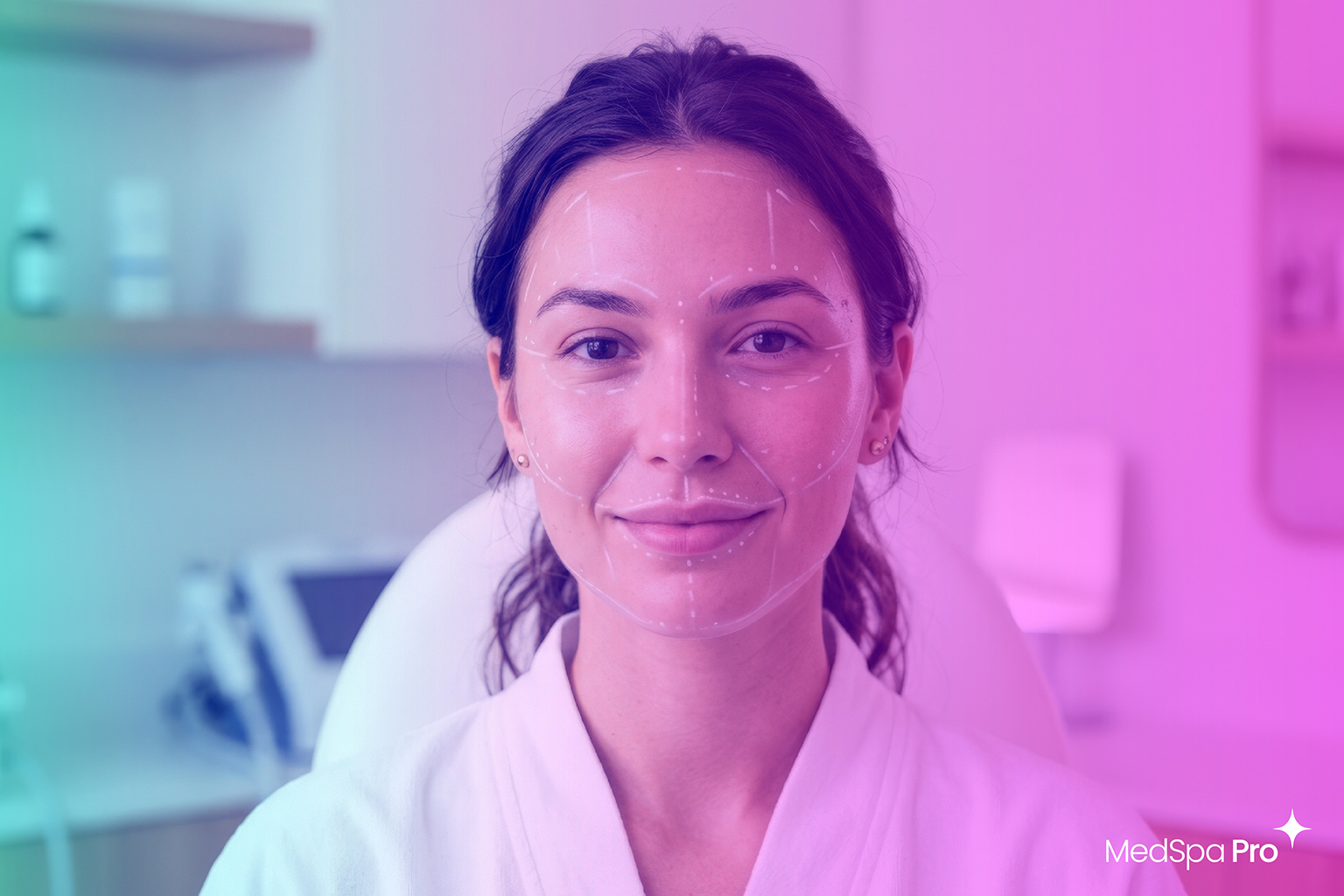
Facial rebalancing is more than just a popular trend in aesthetic medicine; it’s a reflection of the industry’s movement toward minimally invasive cosmetic solutions that offer visible results without surgery. The goal of facial rebalancing is to assess the face as a whole and create a customized treatment plan that enhances symmetry, proportion, and harmony while preserving each patient’s natural features. Rather than treating isolated areas — nasolabial folds or marionette lines, for example — facial rebalancing takes a comprehensive approach to the entire face.
Because it restores symmetry, volume, and balance through the use of dermal fillers and wrinkle-relaxing injections, facial balancing is becoming an increasingly popular option for both patients and aesthetic providers interested in holistic treatments and minimally invasive care. Non-surgical facial balancing offers a non-scarring, no downtime alternative to surgery, and today’s modern aesthetic patients are embracing it enthusiastically.
Facial rebalancing typically combines several treatments while addressing multiple areas of the face simultaneously. Dermal fillers, usually composed of hyaluronic acid, restore lost volume and subtly reshape facial contours. Enhancements to the cheeks, chin, lips, and jawline all contribute to a more balanced, natural-looking appearance.
Wrinkle-relaxing injections can also be incorporated as neuromodulators, softening overactive muscles and reducing lines in dynamic zones, especially around the eyes and forehead. This helps balance facial expressions while creating a refreshed, youthful appearance.
Small amounts of filler or toxin may be strategically placed to achieve subtle, harmonious enhancements. Because every treatment plan is customized to the individual, patients can avoid dramatic transformations and instead emerge from treatment looking refreshed and natural.
"Simply put, facial balancing is about achieving harmony," explained Nima Naghshineh, MD, MSc, FACS, a California plastic surgeon and member of the American Society of Plastic Surgeons. "It's the art and science of subtly enhancing or softening features so the face appears more proportionate and naturally attractive.”
Dr. Naghshineh went on to explain that facial rebalancing is not simply about adding filler to different areas of the face — the procedures are carefully planned and performed with the patient’s existing features as the foundation.
“True facial balancing takes a global approach — assessing how the chin relates to the nose, how the cheeks frame the eyes, how lips complement the lower face,” he said. “It's about creating symmetry where nature left small discrepancies, not about chasing perfection. I like to tell patients, 'You should still look like you, just the most refined, rested version of you.'"
The facial balancing process is technically straightforward, but the individualized nature of treatment requires a thoughtful and personalized approach. In general, facial balancing procedures would follow these steps:
Consultation: Assessment of the patient’s facial features and discussion of goals and expectations to develop a customized treatment plan.
Strategic Application: Injectables are administered into targeted areas to restore volume, refine contours, and address asymmetries.
Follow-Up: Depending on the patient’s metabolism and the products used, results typically last between six and 18 months. Follow-up sessions help maintain facial balance as the face naturally changes over time.
Treatments and techniques, of course, will vary depending on both the provider and the patient's goals, and in some cases surgical or additional minimally invasive procedures may also be incorporated.
"In facial balancing, no two faces — or treatment plans — are ever the same," said Dr. Naghshineh. "I use a full spectrum of tools, from the most delicate nonsurgical touches to definitive surgical procedures. Non surgically, hyaluronic acid fillers are versatile for restoring volume loss and softening asymmetries. I also increasingly turn to bioidentical options like Renuva, which mimics natural fat for soft, subtle fullness without requiring surgical fat transfer."
Facial rebalancing is more than a passing trend. It is a part of the personalized holistic approach in aesthetic medicine that patients are increasingly embracing as a way of achieving a natural, youthful appearance. By prioritizing individuality and celebrating natural beauty, clinicians can now offer patients refreshed, balanced results that help them look and feel their best.
Sources: