
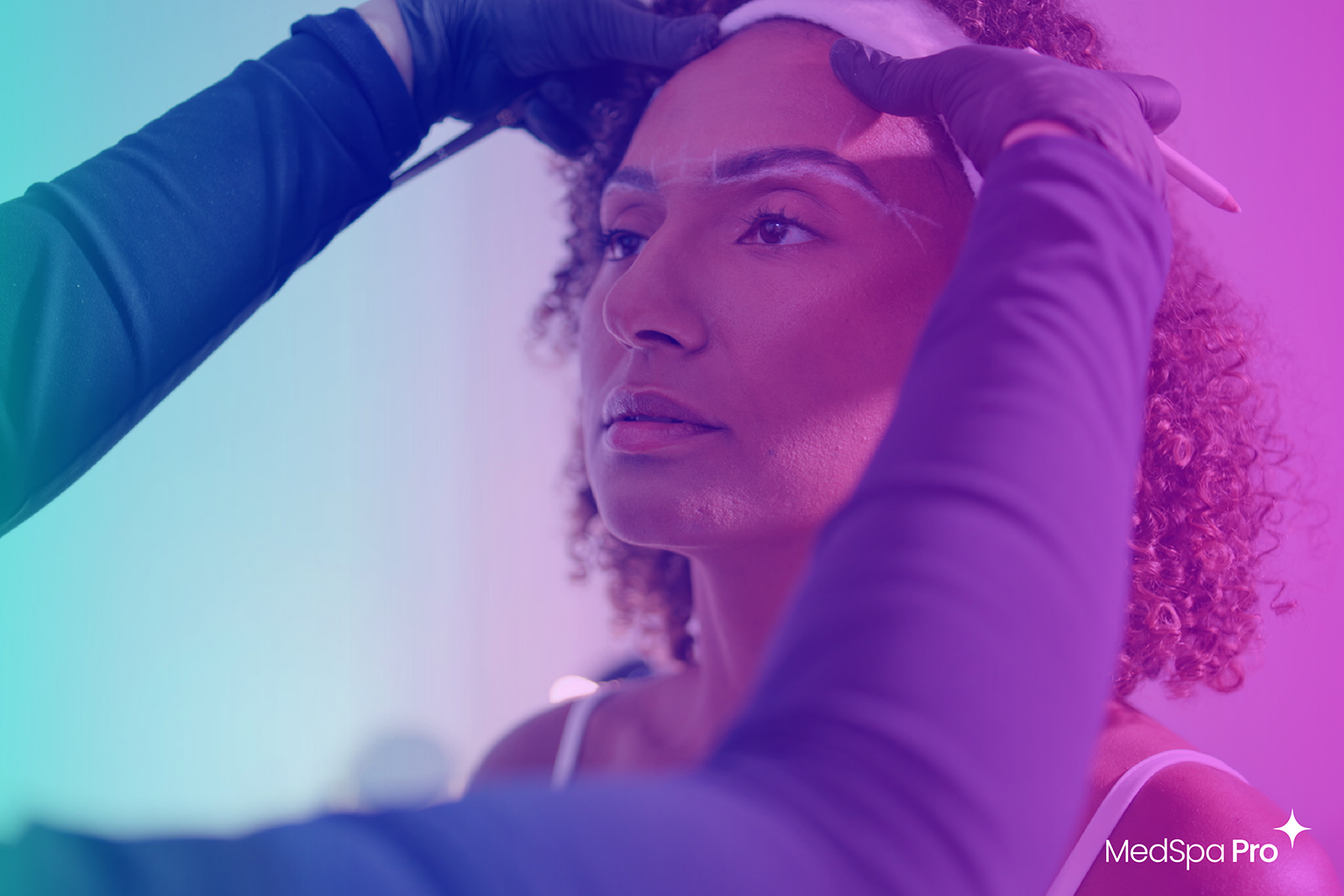
The trend towards personalized, holistic, and inclusive care in dermatology is a positive shift for patients with skin of color. With more than 40% of the U.S. population forming part of this group, the aesthetics industry is increasingly recognizing the need for tailored treatment approaches. This shift is driven by the growing demand for aesthetic treatments, as well as the projections released by the American Academy of Dermatology, indicating that by 2044, no single racial group will make up a majority of the population. By understanding the unique needs of diverse patient populations, aesthetic professionals can better serve a growing market while delivering safe, effective, and personalized care.
To address the unique needs of a diverse patient population, aesthetic clinicians must prioritize ongoing training and education. This includes understanding how treatment responses, outcomes, and management approaches can vary across skin types, as well as identifying which technologies and procedures are most appropriate.
Patients with skin of color may be more prone to concerns such as melasma and post-inflammatory hyperpigmentation (PIH), and some popular aesthetic treatments may require careful adjustment.
“This trend in real-world clinical practice calls for greater knowledge, competence, and management by dermatologists to better serve the aesthetic dermatologic needs for those with darker skin phototypes,” said Monica Li, MD, a clinical instructor in dermatology and skin science at the University of British Columbia in Vancouver, Canada. “As an increasing number of patients of color come to our dermatology practices, clinicians also must appreciate differences in patient needs, outcomes, and management approaches compared to fairer skin types. This recognition requires awareness and education.”
Inclusivity in training is the first step towards reducing bias and improving outcomes for patients with skin of color. Clinicians can use the Fitzpatrick Skin Type classification to guide treatment decisions, along with a thorough pre-treatment assessment that considers skin condition, age, and overall health.
Practicing informed consent ensures that patients are fully informed about the treatment options and potential risks, and providing detailed post-treatment instructions and monitoring for any adverse effects enhances positive outcomes.
Key Points to Consider:
Post-inflammatory hyperpigmentation is a common concern for patients with darker skin tones and may require specific wavelengths and techniques to avoid further damage.
Chemical peels are often used for skin of color, but they can be riskier due to the potential for hyperpigmentation and scarring. Lighter-strength peels are recommended to minimize these risks.
Laser treatments should be approached with caution, especially for melanin-rich skin. Broadband light therapy is a gentler alternative that can be more affordable and effective.
Microneedling is generally safe for medium to dark skin when performed with care.
Omer Ibrahim, MD, a board-certified dermatologist at Chicago Cosmetic Surgery and Dermatology and co-director of Chicago Cosmetic and Dermatologic Research, recommends tailoring treatments to each patient’s particular needs and skin type. Factors such as wavelength selection, energy density, and pulse duration all play a role in treatment safety and effectiveness.
“Although laser treatments are popular, all types of dark spots and skin types aren’t suited for them,” Dr. Ibrahim explained. “Melanin-rich skin requires specific laser wavelengths and techniques to avoid targeting the pigment and causing further damage, and alternative approaches or specific wavelengths should be considered.”
Patients with active acne breakouts, highly sensitive skin, or certain inflammatory skin conditions may not be ideal candidates for some laser treatments. In these cases, alternatives such as broadband light therapy may be a gentler and more cost-effective option.
Dr. Ibrahim’s observations about treating patients with skin of color include the following:
Advancing diversity and inclusivity in aesthetics requires clinicians to expand their knowledge and refine their approach to treatment. Addressing the unique needs of different patient populations not only improves individual outcomes but also raises the overall standard of care.
“Going forward, I am hopeful for more clinical trials and more research and development in evolving technologies and devices that can be used safely and effectively across the skin spectrum,” said Dr. Li. “More importantly, increased knowledge and experience amongst colleagues ultimately will improve aesthetic dermatology care for patients of both light and dark skin tones.”
Sources: